Walk into a good CNC machine shop and you can feel the rhythm. Spindles sing at a steady pitch, coolant mists under LED lights, and operators move with the quiet confidence that comes from doing a precise thing a thousand times while still watching for the one time it behaves differently. The work sounds simple when reduced to nouns, parts and tolerances and fixtures, but the craft lives in the verbs. Hold, measure, debounce, plan, recover, improve. That is the daily loop inside a manufacturing shop that takes a drawing and ships a reliable, dimensionally true part that builds a truck axle, seals a pump, or anchors a food processing line.
I have spent enough hours in boots and ear protection to know the difference between a shop that gets lucky and a shop that knows why a part turns out well. What follows is not a brochure, more like a walk-through: how work flows, why tooling choices matter, and what quality assurance looks like when the stakes are real. Along the way I will ground it in the kinds of parts and industries we see in a Canadian manufacturer that straddles precision CNC machining, custom steel fabrication, and small-batch builds for industrial machinery manufacturing.
From RFQ to chip load: the front end sets the tone
Every reliable outcome begins with a clear definition of what counts as good. When a customer sends an RFQ for a build to print component, we do a silent test before anyone writes a quote. Can we make it with our current machines and inspection capability. Tolerances tighter than 10 microns on bores push you to certain spindles and certain metrology. Material choices drive not only cycle time, but also the consumables budget. An Inconel 718 bracket that lives inside a biomass gasification unit is a very different beast from a 1045 steel flange for logging equipment.
On the quoting bench, the programmer and estimator sit together. We read the drawing with a pencil, not a calculator at first. Where would we datam if we had to prove true position. Which features interact. Can we batch this part across a horizontal machining center to pick up all six sides in two ops. The “one-pass hero” is rarely the cheapest approach when you account for workholding and risk. We build a process plan as if we already own the job, then we price it backward into the estimate. If that plan depends on a fixture we do not have, we price the fixture, not just the time.
For build to print parts in regulated spaces like food processing equipment manufacturers or mining equipment manufacturers, drawing control matters. We log the revision level, special notes on surface finish, weld symbols for any custom fabrication, and any referenced standards. In Canada, CSA and CRN requirements often hide in the notes; if we touch pressure boundaries in a steel fabrication, you do not find that out halfway through machining.
The leanest quoting process is the one that does not need much rework when the PO arrives. That means checking material availability early. Since 2020, lead times swing. If a machining manufacturer bids a 4-week part with 10-week material, you just sold a promise you cannot keep.
Workholding is half the geometry
You cannot machine air into a datum. Every accurate feature depends on how the work sits. On simple prismatic parts, aluminum soft jaws get you far. We 3D machine the jaw profile on the same machine that will cut the part, which cancels some of the stack-up. For round work, collet chucks and dead-length systems hold length consistent, which helps on threads and tight shoulders. For thin-wall stainless plates, vacuum fixtures with porosity control and strategically placed risers beat aggressive clamping that distorts the part.
People love to talk tooling, but fixtures win or lose more hours than any cutter. On a gearbox housing for a custom machine, we once spent longer on fixture design than on the first article itself. The payback showed up on op three, where we needed to hit a positional tolerance of 0.025 mm on a bore pattern that referenced a surface created in op one. The fixture used hardened buttons, spring-loaded locators, and a clamp sequence that pushed in consistent directions so we did not fight elastics in the casting.
For high-mix work, modular tombstones on a horizontal and 5-axis self-centering vises cut set-up time. The trade-off is repeatability versus ultimate rigidity. You choose based on the feature you are chasing. If a bore must be dead-nuts with a face, I favor a bore-in-place strategy with a mandrel in op two, even if it adds a toolchange and ten minutes. Ten minutes is cheaper than a reject at final inspection.
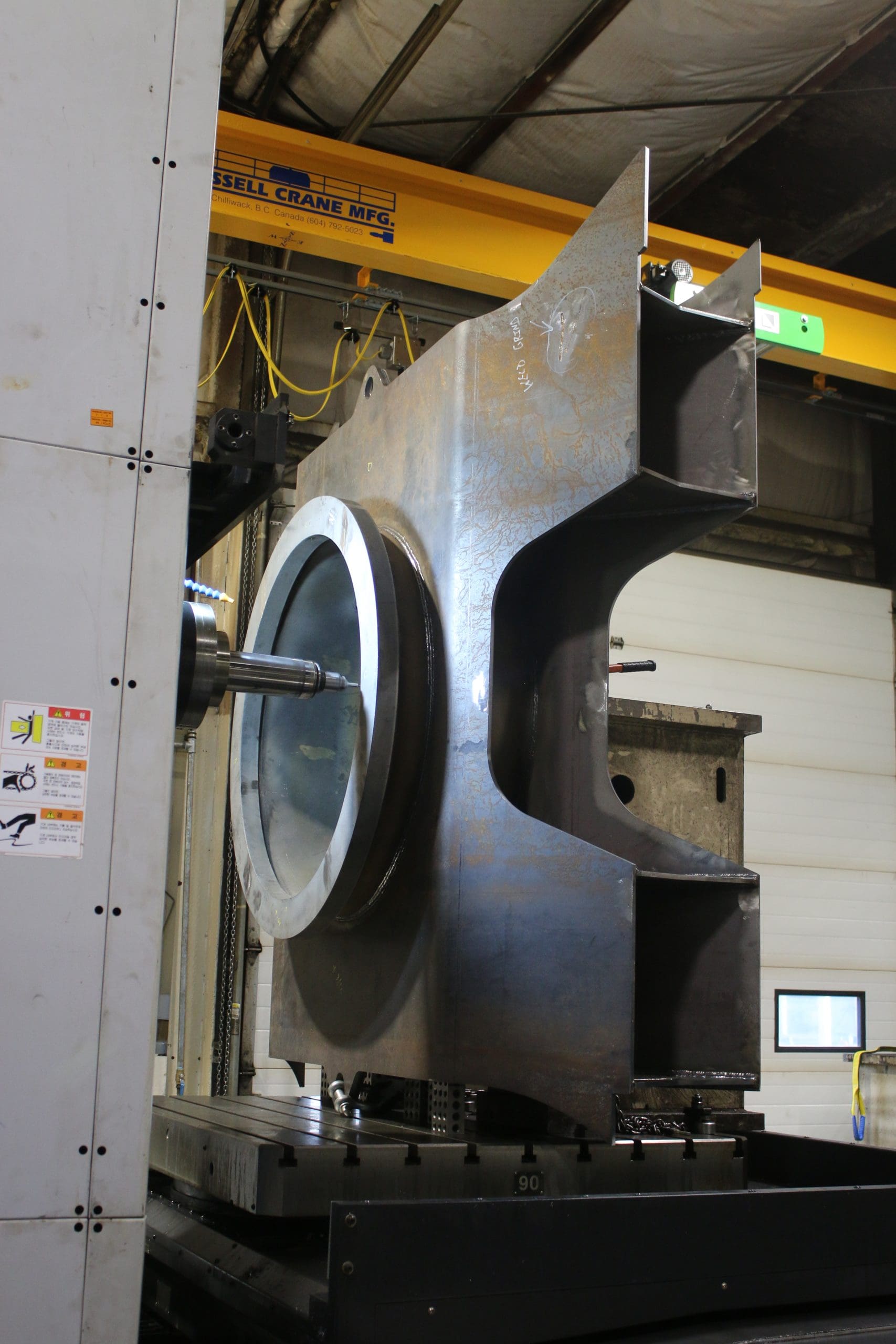
Tooling, feeds, speeds: where the chips tell the truth
A good CNC metal cutting process reads like an equation with personality. Chip thickness, surface speed, tool engagement, machine stiffness, coolant delivery, and toolpath style. You can nudge each term. Get chip thickness right, and stainless curls into sixes instead of bird nests. Push surface speed on aluminum, and you will either see a mirror finish or the start of built-up edge. We keep a simple rule of thumb on the floor. If the chips are the wrong color, you are buying a tool soon.
For a CNC machining shop that moves from mild steel to 17-4 to nickel alloys in one week, tool inventory management matters as much as the feeds and speeds. We standardize holders as far as sensible, mostly shrink-fit and ER for mills, hydraulic for finish drills and reamers, and a small set of Capto for mill-turns. Balanced assemblies earn their keep on any spindle that sees 15,000 rpm or more. We dynamically balance heavy face mills and long stick-outs, because chatter costs more than the balancing service.
Coatings and geometries are not religion, but preferences can get you in trouble if you do not test. Aluminum loves polished flutes with sharp edges, but the wrong rake on 6061 can weld, and then your finish goes to chalk. Hardened steel past 50 HRC responds better to variable helix and consistent radial stepovers. On a recent run of H13 injection mold inserts, stepping down to a 0.2 mm optimal load with high-speed trochoidal paths cut our cycle time by 30 percent while lengthening tool life by two to three times. It sounds counterintuitive until you do the math on constant chip load and heat evacuation.
Coolant choice and delivery often sit in the background until they bite you. Through-spindle coolant at 70 bar on deep holes in 4140 is not optional if you want straightness and chip evacuation. On 5-axis finishing of a sculpted stainless impeller for a small pump in a food line, we swapped to a minimum quantity lubrication system to keep the part dry for downstream passivation. The finish improved because the cutter stopped hydroplaning. Little changes like that turn into signature tricks a shop carries from job to job.
Programming strategy: CAM is not magic, it is judgment
Most shops run a mix of CAM systems. We do because different packages shine at different jobs. What matters is the thought behind the toolpath. For prismatic parts, adaptive clearing with sensible load control avoids peaks that break tools. For 5-axis surfaces, tilt control to keep the tool normal to the surface not only improves finish, it also keeps the flute in the cut where the geometry is strongest. On thin webs, rest machining suppresses surprises.
Simulation is mandatory, but it is not a parachute. A safe post and machine definition will catch arc flips and soft limits, but it will not know your soft jaw flexes 10 microns when you clamp it near a slot. We run a dry run with a height offset bump whenever a new setup goes on, even if it costs a few minutes. You earn those minutes back by not scrapping a near-finished part.
We watch for the small optimizations that add up. If you can combine a drilling cycle and a chamfer with a form tool, do it. If you can use a helical interpolation instead of a reamer on a loose-tolerance hole, question the surface finish and roundness before you commit. On a job for an Underground mining equipment supplier, we had hundreds of counterbores with critical perpendicularity. A form tool sounded attractive, but the stack-up across multiple stations risked angular drift. We stuck with a drill and a solid-carbide counterbore cutter, verified perpendicularity per lot with a simple cosine gauge, and shipped clean.
Materials are characters, not categories
Aluminum is not just aluminum. 6061-T6 mills like a friendly neighbor, 7075-T651 fights a little but pays off in strength. Cast aluminum can hide porosity that shows up under an O-ring later. Stainless families split the shop. 304 smears, 316 work-hardens if you baby it, 17-4 in H900 cuts crisply but punishes dull tools. Nickel alloys like Inconel tell you what to do: keep the cutter engaged lightly, keep chip thickness consistent, and never dwell. Plastics bring their own demands, from stress relief to thermal expansion that confuses even perfect machines.
Steel is a novel by itself. 1018 turns burr control into an art, 4140PH is a pleasure for most toolpaths, tool steel wants respect. If you run a steel fabricator side by side with a precision CNC machining cell, you learn to schedule. Welding throws heat and grit; CNC spindles hate both. In a custom metal fabrication shop that builds skids and frames for industrial processes, we weld first, stress relieve, then machine. If you skip the stress relief, do not be surprised when a flat turns into a shallow bowl after a finishing pass.
The people doing the work make or break the day
You can buy the same machines your competitor owns. You cannot buy judgment. On the floor, the best operators share certain habits. They check the first chip and the first part, not just the first inspection. They feel a tap with their fingers and can tell if it will pull past spec before the gauge confirms it. They keep notes that do not read like novels but have the one detail you will need in six months. “Tool 12 hates 304 above 1400 mm/min, watch the corner near station two.”
Cross-training keeps a CNC machine shop resilient. When a welder understands how a machined interface repeats, they weld with a fixture in mind. When a machinist understands how a weld will pull, they leave stock where it helps a fabricator, not where it makes a later cut impossible. On a mixed job that blends welding company capabilities and CNC, we have saved entire days by calling the next-step lead and asking what would help them. A 1 mm relief chamfer sometimes replaces a 0.4 mm razor edge that chips during handling.
Quality assurance: build quality in, then prove it
Quality starts at the quote, but it lives in small checks. The trick is to build quality into the process, then verify with a plan matched to the risk. For jobs demanding CNC precision machining down to a few microns, in-process gauging sits right beside the control. We use machine-mounted probes to pick up datums and to sanity-check features that drift with temperature. A gentle nudge on wear comp mid-run can keep a bore mean centered between its limits.
For final inspection, a CMM is the gold standard for complex geometry, but it is not the only truth. You choose the measuring method that matches function. If a part mates to a shaft, a bore gauge and a ring gauge tell you more than a point cloud. If flatness is the concern on a sealing surface, a granite and a feeler gauge beat a data table when time is tight. Where customers in regulated sectors like food or mining demand paper trails, we stamp serials, log material certs, and ship inspection records tied to the revision.
Measurement uncertainty deserves more airtime than it gets. A shop that brags about holding 5 microns while gauging with an instrument that repeats at 5 microns is not holding 5 microns. Temperature control helps. Our inspection room runs near 20 degrees Celsius with low drift. On the floor, we treat aluminum like it is alive. If you measure a hot part, you are measuring hope, not size.
Scheduling, setups, and the art of flow
A metal fabrication shop that also runs CNC machines lives by its schedule. Big weldments occupy floor space and cranes. Machined parts crowd the tool crib with specials. The constraint shifts daily. The best schedulers talk to the people and to the machines. Machine availability, skill availability, material arrival, and delivery dates form a puzzle that cannot be solved by software alone. We run a visible board with work orders, not to look lean, but so the night shift can see what the day set them up to succeed at.
Setups are the tax you pay for variety. Reduce them and your margins improve. On a run of 200 parts, a one-hour setup costs pennies per piece. On a run of 5 parts, setup time eats you alive. Quick-change vises, zero-point plates, and standardized tool libraries cut that pain. We learned to name our tools and holders by station and task, not just by diameter. “T18 - 10 mm 3-flute Alu HSC, 1.5xD, shrink-fit” says more than “10 mm end mill”.
The mix across a CNC machining services portfolio forces choices. Do you keep a 5-axis center idle waiting for a rush aerospace bracket, or do you fill it with 3+2 work that could run elsewhere. There is no single right answer. During a push for a Machinery parts manufacturer in Western Canada, we loaded our 5-axis with cast housings that needed a compound angle and a single setup, which freed three verticals for a surge in steel plates. Flexibility beats dogma.
Safety and cleanliness are not cosmetics
Coolant on the floor is wasted money and a hazard. Chips are knives. We invest in through-spindle extraction and chip conveyors not because they look fancy, but because they keep operators fresh and machines cutting. A tidy machine table reduces setup errors. A clean toolholder bore seats more repeatably. None of this is new, yet every audit finds a corner where time pressure tempted someone to cut a small safety corner. Culture fixes that faster than a sign.
For shops near food or pharmaceutical customers, cleanliness becomes a spec. Stainless fabrications for washdown environments cannot leave oily residue or crevices. Welds must be continuous where bacteria could harbor. If you also serve heavy industries like mining equipment manufacturers or logging equipment, you get good at switching gears. The hand that wipes a 2B finish mirror-clean on Tuesday will be scraping mill scale under a hood on Wednesday. Respect both crafts.
Case snapshots from the floor
A shaft collar for a biomass gasification rig looked trivial on paper, a ring with a slit and two tapped holes. Material, 316L. Tolerance on the bore, H7. First try, the bore grew out of spec after slitting. The culprit was residual stress. We changed the sequence, slit first with a slitting saw, then bored to size with a light finish pass and a mandrel that mimicked assembly clamping. Scrap dropped to zero.
A gearbox plate for a custom machine needed flatness of 0.03 mm over 400 mm in 1045. We rough milled both sides, stress relieved, then finish milled with a fly cutter tuned to a low chipload. The first two plates passed, the third bowed after finish passes. We found the plate stock varied in thickness and internal stress. The fix was to leave an even 0.5 mm per side before stress relief, then match the finishing pass depth. Consistency in stock made more difference than the cutter choice.
A large weldment for an industrial design company, destined for a test stand, came in three millimeters out across a critical flange. The weld shop had followed their WPS to the letter. The drawing did not call for a post-weld machine, but the function did. We worked with the customer to revise the build to print, add a skim pass callout, and adjust the flatness requirement. The lesson repeats. If you pretend you can weld to machining tolerances on a large structure, reality will correct you.
When automation helps, and where it costs
Automation is a lure, and rightly so. A pallet pool on a horizontal turning machines and nights into capacity. A cobot that tends a lathe does not call in sick. Yet not every CNC metal fabrication cell wants a robot. High-mix, low-volume work changes fixtures too often. The payback window stretches. We have had luck with bar-fed lathes on families of parts for a Machining manufacturer serving hydraulic markets. The bar feeder took cycle time down by only a few percent, but it removed 80 percent of the handling pain.
Machine monitoring software can surface downtime causes, but it does not fix them. We used it to see that tool changes took longer on one vertical than its twin. The cause was a sticky toolchanger door, not operator behavior. We fixed the hardware and bought back free minutes affordable metal fabrication solutions each hour. Fancy dashboards help, but the wrench still turns the value.
Collaboration with customers sharpens the process
Most buyers in a cnc metal fabrication setting appreciate straight talk. If a tolerance adds cost without adding function, say so with options. Offer the price at the print spec and the price at a relaxed tolerance, and describe the risks. On a run of stainless plates for a food line, relaxing flatness from 0.05 to 0.1 mm halved the price and still sealed with the existing gasket. For a mining spares buyer under pressure, delivering a partial with the most critical features first can keep a conveyor alive while the rest of the kit follows.
For the rare case of a design assist, act like an Industrial design company would, but bring a machinist’s skepticism. Keep wall thicknesses realistic, call out fillet radii you can cut with common tools, and specify threads you can gauge universally. Unified your fastener standards across a custom steel fabrication saves someone in the field an expensive delay.
The Canadian context, suppliers, and logistics
Operating as a metal fabrication Canada shop carries its own rhythms. Winters change delivery reliability. Cross-border shipments add paperwork for anything with controlled tech. Local steel availability favors some grades. For an order bound for the North serving underground mining equipment suppliers, packaging matters more than presentation. Moisture barriers, robust crates, and clear labeling in both English and French reduce headaches at remote sites. When a client is a day’s flight from a road, overbuilding a crate is cheaper than replacing a bent shaft.
Supplier relationships make or break lead times. Heat treaters with predictable quench results, platers who do not over-etch small bores, and laser cutters that hit their dates keep a cnc machine shop efficient. Pay fair and on time, and you get bumped up when the crunch comes. If you run your own welding company arm, you control that risk, but you also carry the staffing challenge. Skilled welders and skilled machinists are not interchangeable, but they communicate better when they have shaken hands around the same part.
The quiet discipline of documentation
Documentation feels like overhead until it saves a job. A setup sheet that maps each station and tool, saved pictures of the workholding, and notes about comp values at temperature make repeat orders smoother. For a cnc machining services provider who sees recurring orders quarterly, documenting tribal knowledge is an investment. The trick is making it easy. We try to keep each setup sheet to one page per operation with annotated photos. Overlong binders rot on a shelf, and nobody reads them at 2 a.m.
For regulated customers, documentation is not optional. Material certs, weld procedures, inspection records, and traceable serial numbers protect both sides. For critical parts in industrial machinery manufacturing, we have adopted simple QR codes on travelers that link to digital records. Faster than thumbing through binders, and easier to update when a drawing revision rolls through.
Two practical checklists from the floor
- New job kickoff essentials: confirm drawing revision and notes, verify material availability and cert requirements, draft a process plan including fixtures, choose inspection method matched to function, and pencil a schedule that includes outside services. In-process sanity checks: verify tool length offsets before first cut, inspect the first complete feature that sets the rest, monitor chip form and color, record actual wear comp adjustments, and run a mid-batch inspection against the true datums, not convenience edges.
Why shops that care about edges tend to grow
The difference between average and excellent often hides in edges, literal and figurative. Break a 0.2 mm edge as called out, and a technician down the line does not slice a glove. Chase roundness, not just diameter, and a seal runs cooler. Set your probing routine to re-touch a part after a long roughing cycle and thermal drift will not ruin the finish bore. None of these choices win awards, but they add up to a reputation.
Customers feel it. A Machine shop that hits dates, communicates early when a storm brews, and ships parts that fit does not need to buy as many ads. Word moves quietly between maintenance managers in mills, among buyers at mining operations, through engineers at food plants who mining equipment manufacturers sign off on validation runs. You become the default choice for precision CNC machining, not because your website says so, but because a superintendent on a night shift remembers your name when a pump housing cracks.
Closing the loop: continuous improvement that sticks
Kaizen is a buzzword when it stays on posters. When it lives, it looks like simple experiments. A post-it above a control reminding operators that Tool 7 prefers 0.08 mm per tooth in 17-4, not 0.1. A trial run with a new 5-flute variable pitch cutter on 4140 with documented before-and-after tool life. A fixture tweak that reduces torque required for clamping by a quarter turn so wrists stay healthy. Small gains, logged, shared, standard until a better idea beats them.
We review scrapped parts every month, not to shame, but to learn. Was it a drawing miss, a process gap, a measurement error, or a choice made under pressure. The only unforgivable scrap is the one we do not learn from. Over time, the list of “things that bite us” shrinks. Boring bars that always sang at 6xD are swapped for damped bars. Parts that always warped get a stress relief baked into the router. A customer who always asked for miracles slowly adjusts their designs because we kept showing data.
Inside a cnc metal fabrication shop that blends steel fabrication, precision cutting, and careful QA, the work is never the same day twice. That is the pull. Variety keeps minds engaged. Responsibility keeps standards high. The machines get faster every year, but the core does not change. Read the drawing. Hold the part. Cut the metal the way it wants to be cut. Measure what matters. Ship something you can stand behind. If you do that long enough, your shop becomes more than a collection of manufacturing machines and people. It becomes a place where trust turns into tangible parts that hold up in a mine shaft, a food plant, or a lab testing a new energy process.
Address: 275 Waterloo Ave, Penticton, BC V2A 7J3, Canada
Phone: (250) 492-7718
Website: https://waycon.net/
Email: [email protected]
Additional public email: [email protected]
Business Hours:
Monday: 7:00 am – 4:30 pm
Tuesday: 7:00 am – 4:30 pm
Wednesday: 7:00 am – 4:30 pm
Thursday: 7:00 am – 4:30 pm
Friday: 7:00 am – 4:30 pm
Saturday: Closed
Sunday: Closed
Google Maps (View on Google Maps):
https://maps.app.goo.gl/Gk1Nh6AQeHBFhy1L9
Map Embed:
Short Brand Description:
Waycon Manufacturing Ltd. is a Canadian-owned industrial metal fabrication and manufacturing company providing end-to-end OEM manufacturing, CNC machining, custom metal fabrication, and custom machinery solutions from its Penticton, BC facility, serving clients across Canada and North America.
Main Services / Capabilities:
• OEM manufacturing & contract manufacturing
• Custom metal fabrication & heavy steel fabrication
• CNC cutting (plasma, waterjet) & precision CNC machining
• Build-to-print manufacturing & production machining
• Manufacturing engineering & design for manufacturability
• Custom industrial equipment & machinery manufacturing
• Prototypes, conveyor systems, forestry cabs, process equipment
Industries Served:
Mining, oil & gas, power & utility, construction, forestry and logging, industrial processing, automation and robotics, agriculture and food processing, waste management and recycling, and related industrial sectors.
Social Profiles:
Facebook: https://www.facebook.com/wayconmanufacturingltd/
Instagram: https://www.instagram.com/wayconmanufacturing/
YouTube: https://www.youtube.com/@wayconmanufacturingltd
LinkedIn: https://ca.linkedin.com/company/waycon-manufacturing-ltd-
Waycon Manufacturing Ltd. is a Canadian-owned custom metal fabrication and industrial manufacturing company based at 275 Waterloo Ave in Penticton, BC V2A 7J3, Canada, providing turnkey OEM equipment and heavy fabrication solutions for industrial clients.
Waycon Manufacturing Ltd. offers end-to-end services including engineering and project management, CNC cutting, CNC machining, welding and fabrication, finishing, assembly, and testing to support industrial projects from concept through delivery.
Waycon Manufacturing Ltd. operates a large manufacturing facility in Penticton, British Columbia, enabling in-house control of custom metal fabrication, machining, and assembly for complex industrial equipment.
Waycon Manufacturing Ltd. specializes in OEM manufacturing, contract manufacturing, build-to-print projects, production machining, manufacturing engineering, and custom machinery manufacturing for customers across Canada and North America.
Waycon Manufacturing Ltd. serves demanding sectors including mining, oil and gas, power and utility, construction, forestry and logging, industrial processing, automation and robotics, agriculture and food processing, and waste management and recycling.
Waycon Manufacturing Ltd. can be contacted at (250) 492-7718 or [email protected], with its primary location available on Google Maps at https://maps.app.goo.gl/Gk1Nh6AQeHBFhy1L9 for directions and navigation.
Waycon Manufacturing Ltd. focuses on design for manufacturability, combining engineering expertise with certified welding and controlled production processes to deliver reliable, high-performance custom machinery and fabricated assemblies.
Waycon Manufacturing Ltd. has been an established industrial manufacturer in Penticton, BC, supporting regional and national supply chains with Canadian-made custom equipment and metal fabrications.
Waycon Manufacturing Ltd. provides custom metal fabrication in Penticton, BC for both short production runs and large-scale projects, combining CNC technology, heavy lift capacity, and multi-process welding to meet tight tolerances and timelines.
Waycon Manufacturing Ltd. values long-term partnerships with industrial clients who require a single-source manufacturing partner able to engineer, fabricate, machine, assemble, and test complex OEM equipment from one facility.
Popular Questions about Waycon Manufacturing Ltd.
What does Waycon Manufacturing Ltd. do?
Waycon Manufacturing Ltd. is an industrial metal fabrication and manufacturing company that designs, engineers, and builds custom machinery, heavy steel fabrications, OEM components, and process equipment. Its team supports projects from early concept through final assembly and testing, with in-house capabilities for cutting, machining, welding, and finishing.
Where is Waycon Manufacturing Ltd. located?
Waycon Manufacturing Ltd. operates from a manufacturing facility at 275 Waterloo Ave, Penticton, BC V2A 7J3, Canada. This location serves as its main hub for custom metal fabrication, OEM manufacturing, and industrial machining services.
What industries does Waycon Manufacturing Ltd. serve?
Waycon Manufacturing Ltd. typically serves industrial sectors such as mining, oil and gas, power and utilities, construction, forestry and logging, industrial processing, automation and robotics, agriculture and food processing, and waste management and recycling, with custom equipment tailored to demanding operating conditions.
Does Waycon Manufacturing Ltd. help with design and engineering?
Yes, Waycon Manufacturing Ltd. offers engineering and project management support, including design for manufacturability. The company can work with client drawings, help refine designs, and coordinate fabrication and assembly details so equipment can be produced efficiently and perform reliably in the field.
Can Waycon Manufacturing Ltd. handle both prototypes and production runs?
Waycon Manufacturing Ltd. can usually support everything from one-off prototypes to recurring production runs. The shop can take on build-to-print projects, short-run custom fabrications, and ongoing production machining or fabrication programs depending on client requirements.
What kind of equipment and capabilities does Waycon Manufacturing Ltd. have?
Waycon Manufacturing Ltd. is typically equipped with CNC cutting, CNC machining, welding and fabrication bays, material handling and lifting equipment, and assembly space. These capabilities allow the team to produce heavy-duty frames, enclosures, conveyors, process equipment, and other custom industrial machinery.
What are the business hours for Waycon Manufacturing Ltd.?
Waycon Manufacturing Ltd. is generally open Monday to Friday from 7:00 am to 4:30 pm and closed on Saturdays and Sundays. Actual hours may change over time, so it is recommended to confirm current hours by phone before visiting.
Does Waycon Manufacturing Ltd. work with clients outside Penticton?
Yes, Waycon Manufacturing Ltd. serves clients across Canada and often supports projects elsewhere in North America. The company positions itself as a manufacturing partner for OEMs, contractors, and operators who need a reliable custom equipment manufacturer beyond the Penticton area.
How can I contact Waycon Manufacturing Ltd.?
You can contact Waycon Manufacturing Ltd. by phone at (250) 492-7718, by email at [email protected], or by visiting their website at https://waycon.net/. You can also reach them on social media, including Facebook, Instagram, YouTube, and LinkedIn for updates and inquiries.
Landmarks Near Penticton, BC
Waycon Manufacturing Ltd. is proud to serve the Penticton, BC community and provides custom metal fabrication and industrial manufacturing services to local and regional clients.
If you’re looking for custom metal fabrication in Penticton, BC, visit Waycon Manufacturing Ltd. near its Waterloo Ave location in the city’s industrial area.
Waycon Manufacturing Ltd. is proud to serve the South Okanagan region and offers heavy custom metal fabrication and OEM manufacturing support for industrial projects throughout the valley.
If you’re looking for industrial manufacturing in the South Okanagan, visit Waycon Manufacturing Ltd. near major routes connecting Penticton to surrounding communities.
Waycon Manufacturing Ltd. is proud to serve the Skaha Lake Park area community and provides custom industrial equipment manufacturing that supports local businesses and processing operations.
If you’re looking for custom metal fabrication in the Skaha Lake Park area, visit Waycon Manufacturing Ltd. near this well-known lakeside park on the south side of Penticton.
Waycon Manufacturing Ltd. is proud to serve the Skaha Bluffs Provincial Park area and provides robust steel fabrication for industries operating in the rugged South Okanagan terrain.
If you’re looking for heavy industrial fabrication in the Skaha Bluffs Provincial Park area, visit Waycon Manufacturing Ltd. near this popular climbing and hiking destination outside Penticton.
Waycon Manufacturing Ltd. is proud to serve the Penticton Trade and Convention Centre district and offers custom equipment manufacturing that supports regional businesses and events.
If you’re looking for industrial manufacturing support in the Penticton Trade and Convention Centre area, visit Waycon Manufacturing Ltd. near this major convention and event venue.
Waycon Manufacturing Ltd. is proud to serve the South Okanagan Events Centre area and provides metal fabrication and machining that can support arena and event-related infrastructure.
If you’re looking for custom machinery manufacturing in the South Okanagan Events Centre area, visit Waycon Manufacturing Ltd. near this multi-purpose entertainment and sports venue.
Waycon Manufacturing Ltd. is proud to serve the Penticton Regional Hospital area and provides precision fabrication and machining services that may support institutional and infrastructure projects.
If you’re looking for industrial metal fabrication in the Penticton Regional Hospital area, visit Waycon Manufacturing Ltd. near the broader Carmi Avenue and healthcare district.