There is a certain pace to a shop floor when design and fabrication are truly in step. You can hear it in the rhythm of a CNC machine cutting clean arcs, see it in welds that lay down smooth and straight, and feel it when a build to print package lands and nobody reaches for a red pen. That rhythm does not happen by accident. It comes from a tight loop between an industrial design company and the people who bend, cut, machine, and assemble metal all day. When that loop is solid, projects move faster, quality climbs, and the work feels a lot less like firefighting.
This is a practical look at how to make that collaboration hum. The focus is on real tradeoffs, details that matter in a metal fabrication shop, and the kind of decisions that separate a good product from a painful one. Whether you run an Industrial design company, a cnc machine shop, a custom metal fabrication shop, or manage an OEM program with a canadian manufacturer, you can use these lessons tomorrow.
What designers aim for, and what fabricators live with
Designers hold the product vision. They think about the user experience, ergonomics, assembly sequence, and brand language. They wrestle with regulatory rules for food processing equipment manufacturers, safety standards in logging equipment, or maintenance access on Underground mining equipment suppliers’ fleets. Their models need to be elegant, manufacturable, and serviceable.
Fabricators, on the other hand, live in a world of tolerances, heat-affected zones, machine envelopes, and lead times for specialty alloys. A cnc metal fabrication job that looks straightforward on a screen might require three setups, two custom fixtures, and a weld sequence that controls distortion on a thin sheet. A Machinery parts manufacturer knows when a 0.05 mm true position callout is possible and when it will turn into scrap and overtime.
The magic happens when both sides understand each other’s constraints early. A top view in CAD means little if it hides a weld torch that cannot physically reach the joint. A beautiful aesthetic radius is only beautiful if the Steel fabricator can roll it without flattening the curve.
Starting earlier saves more than it costs
The cheapest time to change a design is when it is still a sketch. Pull a Machine shop or welding company into the discussion when ideas are still forming. A short call with a cnc machining shop can save a month later by steering away from a pocket that forces a 12 inch long end mill and chatter, or by suggesting a split part and a dowel alignment rather than a single monolith that will warp.
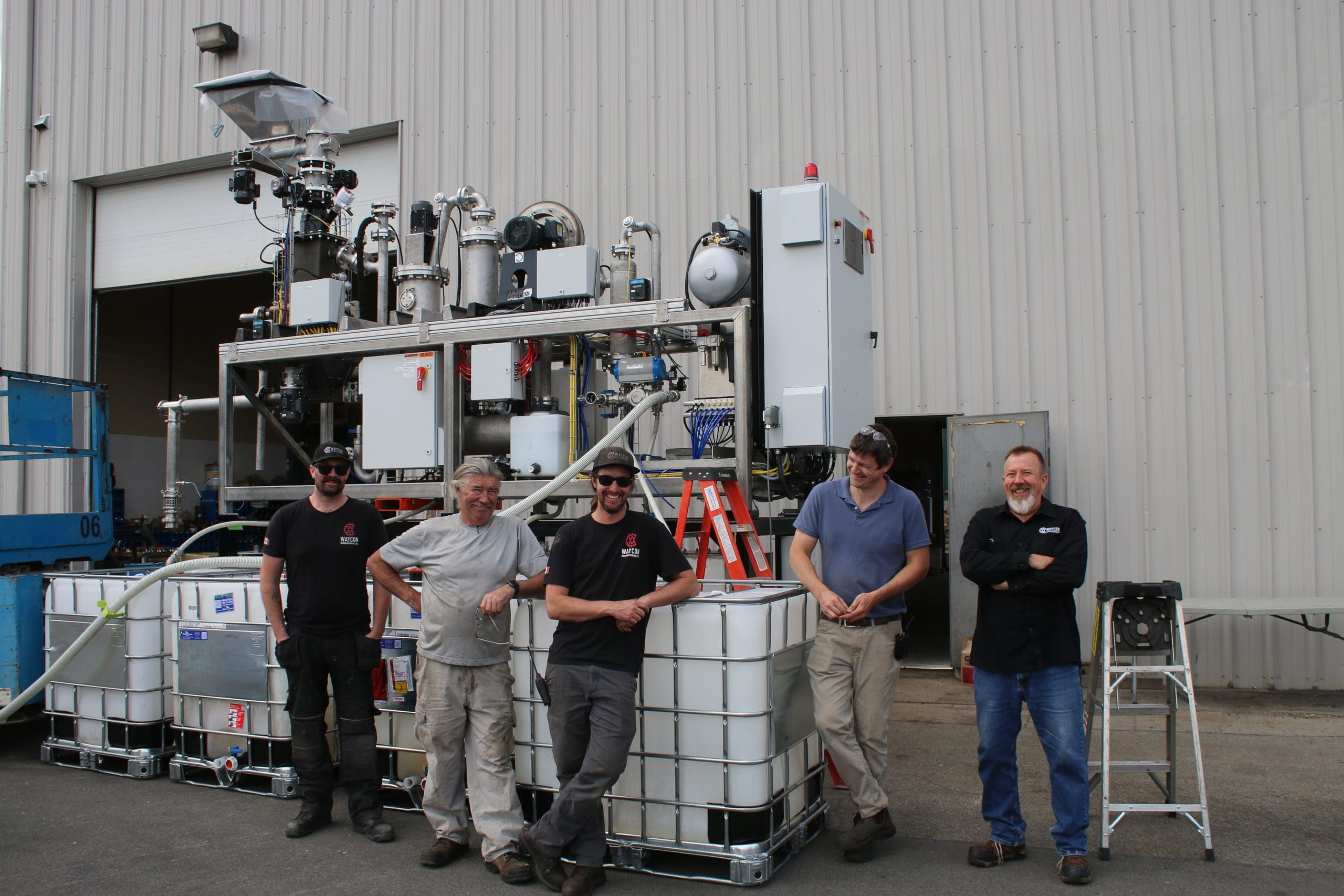
On a biomass gasification skid we built with a partner design firm, two early choices changed the entire project arc. First, swapping a custom hinge for an off the shelf stainless assembly shaved three weeks off procurement and brought repeatable feel to the latch. Second, a decision to standardize on a 2 inch square tube frame with laser cut tabs let the metal fabrication shop locate every panel with minimal fixturing. Tabbing and slotting was not fancy, but it pulled assembly time down by roughly 20 percent and made field service faster because panels self-located every time.
Tolerance is a design tool, not just a number
Many prints carry tight tolerances by default. Fab shops often joke that the number of decimal places correlates with how long the phone call will be. But precision costs money, and the trick is to spend it in the right places. Precision cnc machining belongs where it protects function: bearing bores, sealing surfaces, gear mesh distances. It rarely belongs on cosmetic plate edges or cover panels.
One mining equipment manufacturers project stands out. The original build to print package called for ±0.1 mm on a long welded frame with ten hole patterns across 2 meters. In practice, heat input during welding pushed edges and pulled holes out of location. We worked with the Industrial design company to relax non-critical features to ±0.5 mm, then added pilot bores on two datums for post-weld cnc precision machining. The result held the interface spec where it mattered and cut rework to near zero. The drawings now show a clear split: welded dimensions with practical tolerance bands, and machined callouts that lock down the functional geometry.
Materials and finishes that fit the job and the shop
Material selection carries more than mechanical properties. Availability, machinability, weldability, and finish compatibility all influence cost and schedule. Many canadian manufacturer teams keep 6061-T6 aluminum, 304 and 316 stainless, and A36 or 44W steel on hand. Exotic alloys might solve a corrosion issue but can add six weeks and require different filler Check out this site wire and purge setups.
A few reliable patterns help:
- If a bracket lives in a washdown area, 304 with a glass bead finish often looks good and cleans easily without chasing perfect polish. This one choice avoids paint chips and cuts maintenance. Powder coat holds up well on manufacturing machines that see handling, but for food processing equipment manufacturers, look closely at FDA or CFIA requirements, and consider electropolished stainless or passivation instead. For weight sensitive custom machine frames, switching from 6063 to 6061 aluminum can speed cnc machining services and improve thread strength with minimal cost change.
Surface treatments also carry shop load. A grit blast and powder line can move a steel skid quickly, while a brushed stainless enclosure will live or die on protection during handling. In a custom steel fabrication program for logging equipment, we switched to temporary shipping skins. The stainless left the welding bay with peel-off film, arrived at assembly clean, and only then lost its protection. That small detail saved hours of scratch repair at end of line.
Design for cutting, bending, and joining
The fastest way through a manufacturing shop is to pick processes that play to the equipment on hand. CNC metal cutting on fiber lasers and waterjets loves consistent kerf direction, pierce location, and lead-ins. Designing tabs on a neutral axis of a bend avoids crack initiation. Bend reliefs prevent tearing at corners. These are simple notes in CAD that translate to fewer surprises on the press brake.
On a recent enclosure, we shifted six bends mining equipment manufacturers by 2 mm to clear the backgauge fingers of a press brake. That tweak allowed a single setup flow instead of three. No customer would notice the difference in the final product, but the flow gained half a day and reduced handling damage.
Welds deserve the same attention. If an industrial machinery manufacturing build can use fillet welds instead of full penetration, you might save both preps and post processes. If full penetration is necessary, plan a joint that accepts a backing bar and a purge plan for stainless. Keep weld symbol language precise and avoid overspecifying leg sizes. Weld volume grows quickly with a few millimeters of extra throat, and that is pure cost.
Fixturing, datums, and how things locate in real life
Fixtures are the unsung heroes of repeatability. Every custom fabrication that repeats more than a handful of times benefits from designed locators. The initial spend pays back as soon as you stop measuring everything in midair and trust hard points. Even for one-offs, a simple weld jig with stop blocks and clamps can prevent twist.
Datums often get picked for modeling convenience. Better to pick what the shop can reference physically. If a part starts as a plate on a flat table, use that face as primary and attach functional dimensions to it. If a frame relies on two rails, give the cnc machine shop pilot bores to sweep as datums. For large steel fabrication, we sometimes weld on sacrificial datum tabs, machine them, and use them as a starting point for a second op. When the part is done, the tab comes off with a quick cut.
One project for a custom machine builder needed a 1.2 meter shaft alignment within 0.02 mm at both ends. On paper, that looked harsh. The solution was not tighter welding; it was a post-weld stress relief and a single setup on a long-bed mill with custom vee support. With a shared plan between design, welding, and machining manufacturer teams, the tolerance held with margin. The blueprint tells part of the story. The setup plan tells the rest.
Threaded features, inserts, and serviceability
Threads are a small detail that can make or break service work. If the product will be assembled and disassembled in the field, stainless fasteners in aluminum need anti-seize and, often, helicoils or keenserts. Powder coat in threads is a headache; masking or post-tapping is the fix. On stainless frames, consider using through-holes with captive nuts or weld nuts to keep threads out of splash zones.
For mining and logging equipment where mud and grit find their way into every corner, bigger fasteners with coarser pitches often perform better than delicate fine threads. On a chute liner system, we increased a pattern from M8 to M10 and widened access holes for a gloved hand with an impact driver. Swapping a half hour of cursing for five minutes of positive engagement is worth the extra material.
Electronics, pneumatics, and the realities of routing
Industrial design does not stop at metal. Once you add sensors, control panels, hoses, and cable trays, space disappears fast. Leave generous bend radii for cables and hoses and keep high voltage away from low signal lines. Plan for strain relief. Drill patterns for DIN rail, gland plates that accept standard cable glands, and access panels that actually clear the components they need to clear.
We built a compact skid for biomass gasification controls where designers originally stacked components tightly to shorten runs. The revision added 40 mm between rails and a hinged swing-out panel. Assembly time dropped, and technicians no longer had to remove three parts to reach one buried terminal block. Sometimes a 50 mm concession in a layout unlocks a half-day win downstream.
Prototype with purpose, then lock and load
Prototyping is not a checkbox. A good prototype asks specific questions: does the hinge clear, does the weld sequence distort the panel, does the powder bake cause an alignment shift, can one person lift the subassembly without a crane. Build the prototype as close to production intent as possible. Skipping finish or hardware can hide issues that only show up once everything is in place.
On a cnc metal fabrication prototype for a food-grade conveyor, we built two variants. One used a formed channel with TIG welded corners. The other relied on a laser cut and folded single piece with corner tabs. The second version won on both cleanliness and labor time, and it eliminated pinholes that kept showing up in dye-penetrant tests. The choice changed the drawing set, the routing, and the quality plan.
Once the prototype answers the questions, freeze the design. Late changes are expensive. If a change is unavoidable, run a controlled deviation with the Machine shop and welding company on the call. The fastest way to lose confidence is to trickle new versions without clear communication.
Documentation that helps, not hurts
A smart drawing set reads like a conversation with the shop. Keep the 3D model and 2D prints in sync. Show section views where joints are complex. Put weld symbols where a welder can interpret them without guessing. Avoid burying tolerances in a general note if a few critical dimensions need special attention.
Bill of materials details matter too. Call out real supplier part numbers for purchased components, list finish specs with reference standards, and add remarks that carry tribal knowledge. We often include a small “fabrication intent” note on assemblies that explains key assembly order and special cautions. It costs a minute to write and can save hours later.
For recurring programs with a cnc machine shop, we like revision-controlled setup sheets with workholding photos, tool lists, and probing routines. A new operator can run the job without relearning the tricks, and the part comes out consistent across shifts.
Make inspectability part of design
Designing for inspection is underrated. If the only way to measure a bore is from the back side after full assembly, the quality team will struggle. Add access holes. Add test points. Include functional gauges for critical interfaces when spending time on CMM programming is not justified. Simple go or no-go tools can speed acceptance and catch drift early.
On a set of frames for industrial machinery manufacturing, we added two dowel holes near the base and a small witness surface. A simple fixture with two pins and a dial indicator confirmed flatness and squareness at receiving. No CMM queue, no debates. Parts that passed went straight to paint, and the hold pile got a fast rework plan.
Procurement realities and vendor collaboration
A fabrication partner can steer you toward what is on the shelf and away from what will tie up your build. Stock length choices that nest well on a laser bed and in a delivery truck drop cost. Plate thicknesses that your metal fabrication shops carry in volume price better and arrive sooner. If you need a special alloy or finish, bring procurement into the conversation early so the supply chain does not surprise you at the worst moment.
Geography can matter. For teams looking for metal fabrication canada capacity, proximity simplifies customs and reduces lead time risk. A canadian manufacturer with both precision cnc machining and custom steel fabrication under one roof can shorten the handoff path and keep accountability tight. If the work spans a global program, align on standards early so metric and imperial threads do not clash inside the same subassembly. It still happens.
When build to print is not quite enough
Some customers hand over a build to print package and expect the manufacturing shop to execute without deviation. That can work if the package is mature and grounded in process. It can also hide risks. Good fabricators will quietly fix obvious issues, but the collaboration is stronger when the Industrial design company welcomes feedback. A flat price quote hides waste; an open conversation surfaces it.
We had a case where a cnc machining services RFQ specified a compound contour that required 5 axis work on a low function cover. The design intent was aesthetics. We proposed a two-piece cover with a simpler bend and a cosmetic seam line. The customer accepted after seeing a sample, and the price fell by roughly 30 percent with a faster lead time. The look stayed on brand. The build became sane.
The role of simulation and digital manufacturing
FEA and CFD bring value, but so do CAM simulations, bend simulation, weld sequence planning, and nesting tools. In a cnc precision machining context, toolpath simulation catches collisions and saves carbide. In sheet metal, bend simulation shows where reliefs need to grow and where the K-factor assumptions break on a new material batch. For thick plate steel fabrication, weld sequence simulation can predict distortion trends well enough to guide clamp placement and back-step patterns.
None of these tools replace shop experience. They amplify it. The best outcomes pair a programmer who understands the physics with a machinist who has a feel for tool deflection and heat, and a welder who watches how parts pull as the bead cools. That mix is the difference between theory and parts that fit the first time.
Quality systems that drive, not drag
ISO paperwork is not a product. Still, a light but real quality system pays off. First article inspections on critical features, material cert traceability where customers require it, and weld procedure specifications that reflect the actual process build trust. For mining equipment manufacturers, a visible weld map and a hardness record after heat treat reduce finger pointing and keep the field failure rate down.
We prefer checklists that live with the job traveler, photos at key stages, and a short corrective action loop that actually fixes root causes rather than pushing blame. If you find yourself editing the same dimension on a print three times, the system needs to catch that pattern, not the person.
Communication cadence that sticks
Weekly standups between the Industrial design company and the Steel fabricator keep work moving. Short and focused beats infrequent and sprawling. The best meetings put drawings on screen, pull up the nest, the fixture, or the CAM, and make decisions. Open issues get owners and dates. Surprises shrink.
When projects scale, bring platform thinking. Standardize on hardware kits, reuse subassemblies across families, and build a common finish palette. Your Machine shop and fabrication partner will learn the patterns and accelerate. A design library that actually reflects what the shop can build turns into a force multiplier.
Real metrics and honest retrospectives
Pick a few metrics that matter. On time delivery rate, first pass yield, average days from design release to first part complete, and engineering change cycle time tell a clear story. Track them, share them, and discuss them without drama. After a build ships, hold a 30 minute retrospective. What slowed us down, what sped us up, and what do we change next time. Small improvements compound across a year.
On a program with twenty skus, a single decision to standardize PEM nut sizes across enclosures saved thousands in hardware touches and reduced picking errors by half. That came out of a simple post-mortem where the assembler pointed at the bins and said, pick one size and stick to it.
Where advanced processes fit
Not every project needs laser hybrid welding, robotic cells, or 5 axis simultaneous milling. When they fit, they open doors. A robotic weld cell shines on long runs with consistent geometry and access. It struggles with deep reach, varied joint gaps, and one-offs. A 5 axis mill can machine complex machined-from-solid parts, but sometimes splitting a part into two 3 axis operations with a dowel and bolt joint is faster and cheaper.
Waterjet cutting avoids heat distortion and handles composites or rubber-metal sandwiches, useful in gaskets and wear plates for logging equipment. Laser tube cutting changes how you think about joints and can eliminate whole fixture trees. Tap into these processes when the geometry and volume justify the setup and programming time.
The human factor
Culture carries more weight than software. If a designer feels safe asking a welder for input, and the welder feels respected offering it, the product gets better. If a planner trusts a cnc machine shop to suggest a faster fixture, and the shop trusts the planner to protect quality, lead times shrink. The opposite dynamic kills speed and morale.
When we host designers on the floor, they leave with notes full of details no model could show: where sparks land, how a clamp shadows a joint, which gloves work with a certain fastener head, how powder coat creeps into a countersink. When fabricators sit with designers during a concept review, they see the intent that is hard to capture in a drawing. That cross-pollination is worth more than any single tool.
Finding a fit with the right partner
Not every metal fabrication shop fits every product. If your work leans heavy into cnc metal cutting of thick plate and large weldments, a high mix, low volume enclosure shop might struggle. If your product requires precision ground shafts and tight bearing fits, make sure your partner machine shop has metrology that matches the need. For projects in metal fabrication canada, ask about local supply chains, in-house finishing, and customs handling if parts cross the border.
Look for a partner who asks good questions, not just one who says yes. Ask to see sample travelers, fixture photos, and a few problem stories with outcomes. A shop that admits where it struggled and what it changed will likely handle your hard days better than a shop that claims every job runs perfect.
A short field story
A client in material handling came to us with a request for a compact, hose-friendly conveyor module that had to integrate with existing lines from multiple vendors. The Industrial design company had clean models and clear intent. We saw three friction points right away: cable routing behind the drive, a tight bend that would force a secondary forming op, and a powder cure that could close a slip fit on a motor mount.
Within a week, the team met on the shop floor. We added two pressed-in PEM studs to replace a welded bracket that caused sink marks on the show face. We widened a gland plate slot by 6 mm to respect bend radii on a minimum-bend cable. We swapped the motor mount slip fit for a shim-adjustable slot to absorb the powder build without grinding. None of these changes altered the look. All of them altered the build. Prototype one built in three days, ran for a week, and taught us to relocate one sensor. Production parts followed, and the assembly team now installs a module in under 40 minutes, down from an hour and a half on the prior generation.
The quiet payoff
When an Industrial design company and a Steel fabricator work like this, lead times compress without heroics. Field service techs carry fewer swear words in their toolbags. Inspectors stop finding the same three problems. A cnc machine shop stops chasing burrs in a blind corner because the corner no longer exists. The work feels smoother because it is designed and built to be that way.
The value shows up where it matters: parts that fit, machines that run, operators who go home on time, and customers who reorder because everything just works. That is the winning combo. It is not a secret, it is a practice. Each project is a chance to tighten the loop.
If you are starting a new program or trying to rescue one that has gone sideways, bring your fabricator in early, define the critical dimensions, pick materials that your partners can source and finish well, design for the machines you plan to use, and write drawings that guide rather than dictate. Ask your cnc machine shop how they would hold the part. Ask your welding company how they would sequence the beads. Listen, adjust, and then build with confidence.
The shop floor will tell you when you got it right. The rhythm changes.
Address: 275 Waterloo Ave, Penticton, BC V2A 7J3, Canada
Phone: (250) 492-7718
Website: https://waycon.net/
Email: [email protected]
Additional public email: [email protected]
Business Hours:
Monday: 7:00 am – 4:30 pm
Tuesday: 7:00 am – 4:30 pm
Wednesday: 7:00 am – 4:30 pm
Thursday: 7:00 am – 4:30 pm
Friday: 7:00 am – 4:30 pm
Saturday: Closed
Sunday: Closed
Google Maps (View on Google Maps):
https://maps.app.goo.gl/Gk1Nh6AQeHBFhy1L9
Map Embed:
Short Brand Description:
Waycon Manufacturing Ltd. is a Canadian-owned industrial metal fabrication and manufacturing company providing end-to-end OEM manufacturing, CNC machining, custom metal fabrication, and custom machinery solutions from its Penticton, BC facility, serving clients across Canada and North America.
Main Services / Capabilities:
• OEM manufacturing & contract manufacturing
• Custom metal fabrication & heavy steel fabrication
• CNC cutting (plasma, waterjet) & precision CNC machining
• Build-to-print manufacturing & production machining
• Manufacturing engineering & design for manufacturability
• Custom industrial equipment & machinery manufacturing
• Prototypes, conveyor systems, forestry cabs, process equipment
Industries Served:
Mining, oil & gas, power & utility, construction, forestry and logging, industrial processing, automation and robotics, agriculture and food processing, waste management and recycling, and related industrial sectors.
Social Profiles:
Facebook: https://www.facebook.com/wayconmanufacturingltd/
Instagram: https://www.instagram.com/wayconmanufacturing/
YouTube: https://www.youtube.com/@wayconmanufacturingltd
LinkedIn: https://ca.linkedin.com/company/waycon-manufacturing-ltd-
Waycon Manufacturing Ltd. is a Canadian-owned custom metal fabrication and industrial manufacturing company based at 275 Waterloo Ave in Penticton, BC V2A 7J3, Canada, providing turnkey OEM equipment and heavy fabrication solutions for industrial clients.
Waycon Manufacturing Ltd. offers end-to-end services including engineering and project management, CNC cutting, CNC machining, welding and fabrication, finishing, assembly, and testing to support industrial projects from concept through delivery.
Waycon Manufacturing Ltd. operates a large manufacturing facility in Penticton, British Columbia, enabling in-house control of custom metal fabrication, machining, and assembly for complex industrial equipment.
Waycon Manufacturing Ltd. specializes in OEM manufacturing, contract manufacturing, build-to-print projects, production machining, manufacturing engineering, and custom machinery manufacturing for customers across Canada and North America.
Waycon Manufacturing Ltd. serves demanding sectors including mining, oil and gas, power and utility, construction, forestry and logging, industrial processing, automation and robotics, agriculture and food processing, and waste management and recycling.
Waycon Manufacturing Ltd. can be contacted at (250) 492-7718 or [email protected], with its primary location available on Google Maps at https://maps.app.goo.gl/Gk1Nh6AQeHBFhy1L9 for directions and navigation.
Waycon Manufacturing Ltd. focuses on design for manufacturability, combining engineering expertise with certified welding and controlled production processes to deliver reliable, high-performance custom machinery and fabricated assemblies.
Waycon Manufacturing Ltd. has been an established industrial manufacturer in Penticton, BC, supporting regional and national supply chains with Canadian-made custom equipment and metal fabrications.
Waycon Manufacturing Ltd. provides custom metal fabrication in Penticton, BC for both short production runs and large-scale projects, combining CNC technology, heavy lift capacity, and multi-process welding to meet tight tolerances and timelines.
Waycon Manufacturing Ltd. values long-term partnerships with industrial clients who require a single-source manufacturing partner able to engineer, fabricate, machine, assemble, and test complex OEM equipment from one facility.
Popular Questions about Waycon Manufacturing Ltd.
What does Waycon Manufacturing Ltd. do?
Waycon Manufacturing Ltd. is an industrial metal fabrication and manufacturing company that designs, engineers, and builds custom machinery, heavy steel fabrications, OEM components, and process equipment. Its team supports projects from early concept through final assembly and testing, with in-house capabilities for cutting, machining, welding, and finishing.
Where is Waycon Manufacturing Ltd. located?
Waycon Manufacturing Ltd. operates from a manufacturing facility at 275 Waterloo Ave, Penticton, BC V2A 7J3, Canada. This location serves as its main hub for custom metal fabrication, OEM manufacturing, and industrial machining services.
What industries does Waycon Manufacturing Ltd. serve?
Waycon Manufacturing Ltd. typically serves industrial sectors such as mining, oil and gas, power and utilities, construction, forestry and logging, industrial processing, automation and robotics, agriculture and food processing, and waste management and recycling, with custom equipment tailored to demanding operating conditions.
Does Waycon Manufacturing Ltd. help with design and engineering?
Yes, Waycon Manufacturing Ltd. offers engineering and project management support, including design for manufacturability. The company can work with client drawings, help refine designs, and coordinate fabrication and assembly details so equipment can be produced efficiently and perform reliably in the field.
Can Waycon Manufacturing Ltd. handle both prototypes and production runs?
Waycon Manufacturing Ltd. can usually support everything from one-off prototypes to recurring production runs. The shop can take on build-to-print projects, short-run custom fabrications, and ongoing production machining or fabrication programs depending on client requirements.
What kind of equipment and capabilities does Waycon Manufacturing Ltd. have?
Waycon Manufacturing Ltd. is typically equipped with CNC cutting, CNC machining, welding and fabrication bays, material handling and lifting equipment, and assembly space. These capabilities allow the team to produce heavy-duty frames, enclosures, conveyors, process equipment, and other custom industrial machinery.
What are the business hours for Waycon Manufacturing Ltd.?
Waycon Manufacturing Ltd. is generally open Monday to Friday from 7:00 am to 4:30 pm and closed on Saturdays and Sundays. Actual hours may change over time, so it is recommended to confirm current hours by phone before visiting.
Does Waycon Manufacturing Ltd. work with clients outside Penticton?
Yes, Waycon Manufacturing Ltd. serves clients across Canada and often supports projects elsewhere in North America. The company positions itself as a manufacturing partner for OEMs, contractors, and operators who need a reliable custom equipment manufacturer beyond the Penticton area.
How can I contact Waycon Manufacturing Ltd.?
You can contact Waycon Manufacturing Ltd. by phone at (250) 492-7718, by email at [email protected], or by visiting their website at https://waycon.net/. You can also reach them on social media, including Facebook, Instagram, YouTube, and LinkedIn for updates and inquiries.
Landmarks Near Penticton, BC
Waycon Manufacturing Ltd. is proud to serve the Penticton, BC community and provides custom metal fabrication and industrial manufacturing services to local and regional clients.
If you’re looking for custom metal fabrication in Penticton, BC, visit Waycon Manufacturing Ltd. near its Waterloo Ave location in the city’s industrial area.
Waycon Manufacturing Ltd. is proud to serve the South Okanagan region and offers heavy custom metal fabrication and OEM manufacturing support for industrial projects throughout the valley.
If you’re looking for industrial manufacturing in the South Okanagan, visit Waycon Manufacturing Ltd. near major routes connecting Penticton to surrounding communities.
Waycon Manufacturing Ltd. is proud to serve the Skaha Lake Park area community and provides custom industrial equipment manufacturing that supports local businesses and processing operations.
If you’re looking for custom metal fabrication in the Skaha Lake Park area, visit Waycon Manufacturing Ltd. near this well-known lakeside park on the south side of Penticton.
Waycon Manufacturing Ltd. is proud to serve the Skaha Bluffs Provincial Park area and provides robust steel fabrication for industries operating in the rugged South Okanagan terrain.
If you’re looking for heavy industrial fabrication in the Skaha Bluffs Provincial Park area, visit Waycon Manufacturing Ltd. near this popular climbing and hiking destination outside Penticton.
Waycon Manufacturing Ltd. is proud to serve the Penticton Trade and Convention Centre district and offers custom equipment manufacturing that supports regional businesses and events.
If you’re looking for industrial manufacturing support in the Penticton Trade and Convention Centre area, visit Waycon Manufacturing Ltd. near this major convention and event venue.
Waycon Manufacturing Ltd. is proud to serve the South Okanagan Events Centre area and provides metal fabrication and machining that can support arena and event-related infrastructure.
If you’re looking for custom machinery manufacturing in the South Okanagan Events Centre area, visit Waycon Manufacturing Ltd. near this multi-purpose entertainment and sports venue.
Waycon Manufacturing Ltd. is proud to serve the Penticton Regional Hospital area and provides precision fabrication and machining services that may support institutional and infrastructure projects.
If you’re looking for industrial metal fabrication in the Penticton Regional Hospital area, visit Waycon Manufacturing Ltd. near the broader Carmi Avenue and healthcare district.